Showing posts with label high performance practices. Show all posts

Friday, August 9, 2013

How Do You Develop Peak Performers?

A financial analyst once asked Herb Kelleher, Co Founder of Southwest Airlines “... if he was afraid of losing control of his organization." Herb told him that he never had control, and he never wanted it. In his words, "If you create an environment where the people truly participate, you don’t need control. They know what needs to be done and they do it.”

High performance people see things not only as they are, but also as they could be. This is the first step in creating an environment and structure where people truly participate and genuinely believe they are integral to the organization’s success. When people expand their focus on the possible, they begin to seek new and better ways of doing things. They realize they have the capacity to shape their lives rather than accept things as they are. Leadership is the norm, not the exception. Everyone is encouraged to examine situations and lead in response to them. Previous habits of “doing it this way because we have always done it this way” give way to new attitudes, innovative thinking, and process improvements. The philosophy “if it isn’t broke don’t fix it,” gives way to “regardless of how good it is, we can make it better.”


Mentoring people to higher levels of performance requires that you establish the conditions within which performance serves both the organization’s as well as the individual’s best interests. The structure and culture of the organization must support the efforts of the individuals. Everyone needs to realize that his or her best interests and personal successes are served by the success of the entire organization. If the environment is not conducive to supporting and guiding people to new levels of achievement, new skills and behaviors will not thrive. You cannot lead people to higher levels of achievement if the structures do not support the behavior.

The way people think leads to what they do. What people do leads to results. If you want to improve results, it makes sense to improve the way people think. Significant achievement is not likely without change, and change in behavior starts with a change in thinking.

You have no doubt heard the expression, “We are creatures of habit.” There is considerable truth to that statement, for almost all that we do and most of what we think is the result of habits that have been formed during the course of a lifetime. Much of what we do in a 24-hour period demands little conscious thought because we have developed habits that help us accomplish a number of things – on auto-pilot. Just as much of our behavior is habit, so are most of our attitudes. Attitudes are habits of thought. We have thought the same way about something for so long that it is now a habit. While some habits are useful in preventing us from having to consciously figure out the mechanics each time we confront a familiar situation, many habits keep people from stretching their capabilities and trying new, inventive, and possibly better ideas or techniques. Behavior and performance are likened to attitudes. If you want to improve performance, you have to improve the habits of thought that improve performance.


How are the “we have always done it this way” attitudes and habits holding your organization back from the success you need to achieve?


Wednesday, August 7, 2013

Leading People into High Performing Roles

Continuing on with my topic of the week, on performance, let me discuss the various stages of becoming a high performer in this 2nd article (here is the 1st article if you haven't already read it.)

As we become more specific about our goals and begin to acquire more knowledge and skills in developing others, our chances of success will greatly increase. 

The more clear we are on what we want, the more power we will have to achieve it. We all have the means within us to free ourselves from the constraints of early negative conditioning. Attitude change is a result of internal understanding and acceptance.

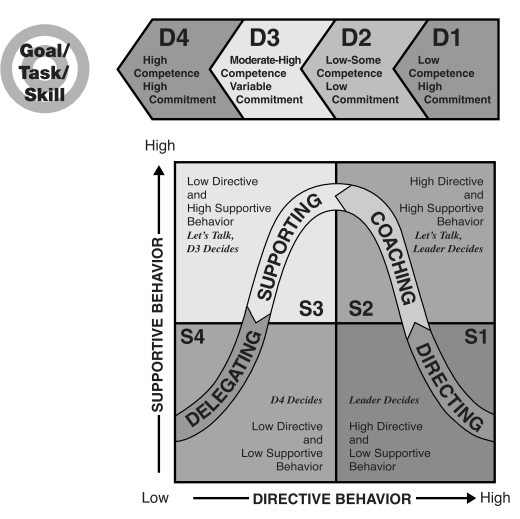
Once you are able to begin the process of helping people develop positive and possibility attitudes, you create even more possibilities. It’s rather like knowledge and learning. Generally, the more you know and learn, the more you realize there is to learn. The more you focus on possibilities, the more possibilities seem to be possible. High expectation and positive attitudes lead to high performance. High performance leads to higher expectations. Individuals and teams go through four stages of development before they become high performers.


Stage 1: In the beginning, you may find that as people move into uncharted waters and begin to perform tasks and make decisions that are new, they will need a great deal of attention from you. Anytime there is a need for new knowledge or apprehension about the outcomes, people will require direction. Many will have to be shown how to perform a particular task. Others will need explanation, information, and instruction. Most will still look to you for decisions and priorities. Your behavior at this stage should be highly directive. You will need to provide knowledge and model behavior to help people learn, understand, and develop competence. This requires time and patience. That outcome, however, is more time for you because as they become competent, they are more willing to perform functions that once took your time.

Stage 2: As people become more competent in their roles and their attitudes are more positive, the need for highly directive supervision and instruction diminishes. Your role then becomes that of a coach. Coaches still provide direction, suggestions, and input, but begin to elicit more feedback, and decisions are frequently made jointly. As confidence and competence grow, people will begin to make suggestions and provide you with input and ideas. Your behavior needs to be supportive and focused on mutual goal setting, high recognition, and praise for accomplishments. This two-way process creates a tremendous opportunity to lead people to even higher levels of performance.

Stage 3: As people become more confident about their ability to perform their jobs successfully, you can empower them to make decisions that influence the outcomes. Delegate authority to solve problems and make improvements. Enhance personal responsibility and accountability. Create additional opportunities. Be highly supportive but less directive. People need to feel like they have control over those factors which affect their destiny. As they control more of their activities, you can spend less time managing people and processes and spend more time growing the company. Developing people has immense benefits for the future.

Stage 4: At this final stage, people want to do their jobs and they have developed the competence and confidence to know they can. They can be counted upon to make decisions, implement change, achieve their business goals, and positively impact the success of the organization. They will require very little supervision from you. Provide support, but refrain from over managing that which they know how to do. Instead, their greatest need will be your leadership. They will look to you to provide the direction, the values, and the behaviors that they can emulate to help build their divisions, departments, and people. They will seek new and better ways to do business.

Seek out potential leads in your organization. Create an environment, develop the personal skills, and nurture the innovation that can ensure your competitive advantage. Meeting the challenges that you will face tomorrow will require you to drive leadership qualities throughout your organization because it will require everyone to see beyond traditional methods and expected outcomes. 

The future belongs to those who create it!


Sunday, March 17, 2013

Managing YourSelf - Part IV


One of the most important parts of business management is managing yourself. It’s not about managing the business but, it’s about organizing your life so you can accomplish the things that are important.

There are five key critical lessons that I have been posting here one lesson for each day. Click here, if you missed Part I on Thursday; here for Part II on Friday and here for Part III yesterday. 

#4. “Effective executives concentrate on the few major areas where superior performance will produce outstanding results. They force themselves to set priorities and stay with their priority decisions. They know that they have no choice but to do first things first—and second things not at all. The alternative is to get nothing done.”

Getting things done is not enough. You must get the right things done. What is most important? Focus on that.

To be effective is the job of the executive. “To effect” and “to execute” are, after all, near-synonyms. Whether he works in a business or in a hospital, in a government agency or in a labor union, in a university or in the army, the executive is, first of all, expected to get the right things done. And this is simply that he is expected to be effective… All in all, the effective executive tries to be himself; he does not pretend to be someone else. He looks at his own performance and at his own results and tries to discern a pattern. “What are the things,” he asks, “that I seem to be able to do with relative ease, while they come rather hard to other people?”

Come back tomorrow for lesson #5.  _/|\_

Wednesday, February 1, 2012

Quantum Physics of Belief - Employee Engagement


For the past few weeks, I was writing on how scientific and business research shows that human thoughts and beliefs have an effect on the physical world. In this article, I am going to explore further on organizations that are increasingly embracing employee engagement as an important organizational goal to greater profitability and discuss how effective that is.

In the recent years, employee engagement has emerged as an accepted and significant indicator of the degree to which employees are enthusiastic about and satisfied with their work and the business for which they work. It includes elements that may be classified into two categories: 1) job satisfaction and 2) high performance practices. Job satisfaction pertains to employees’ level of contentment with compensation, job security, and management. High performance practices pertain to the degree to which employees are involved in making the business successful through process improvement initiatives and participative decision making.

There is a wealth of evidence showing that when employees are fully engaged, the company experiences a greater level of financial success. Employee engagement has three related components: a cognitive, an emotional, and a behavioral aspect. The cognitive aspect of employee engagement concerns employees’ beliefs about the organization, its leaders, and working conditions. The emotional aspect concerns how employees feel about each of those three factors and whether they have positive or negative attitudes toward the organization and its leaders. The behavioral aspect of employee engagement is the value-added component for the organization and consists of the discretionary effort engaged employees bring to their work in the form of extra time, brainpower and energy devoted to the task and the firm.

In a study published in 2003, researchers investigated the causal relationship between employee engagement and business profitability by measuring the individual elements of employee engagement over eight years and then correlated them individually with financial success over that same time period. They found that satisfaction with compensation, job security and management don’t drive, or precede, higher profitability, but rather higher profitability causes, or precedes, higher satisfaction with these elements. In contrast, researchers found that high performance practices do cause higher profitability. In other words, when businesses significantly involve employees in decision making and improvement initiatives, this causes an increase in profitability, and this is the only element of employee engagement that causes higher profitability. Therefore, if you are aiming to improve financial performance by improving employee engagement, you should focus on high performance practices. However, this is not the whole story.

It has been suggested that people who are very satisfied are not necessarily high performers, and with the constantly changing business environment, employees who are too happy and content, feel less inclined to seek improvements, change, or do things differently. In today's climate, this tends not to be a good position for any business; rather, a company needs staff that is energized, motivated and eager or willing to try something new.

Recent physics research presents evidence that is difficult for many people to accept, yet it is undeniable. As explored in my earlier articles, conditions in the physical world are being directly influenced by the contents of our thoughts, beliefs and intentions. The impact of intentionality is especially relevant to employee engagement.

Intentions are a projection of awareness toward a particular result with the belief that the outcome can be influenced. Scientific experimentation has overwhelmingly proven that human intentions significantly influence events so that they are more likely to occur in the direction of the intentions. [See my earlier articles on how this works in business.] Experimentation has provided solid evidence that group intentions can change conditions in the physical world; for example: biological systems in insects, pH level of bodies of water, and the health of cancer patients, to name just a few.

When employees are highly involved in making a business successful, they develop a feeling of ownership for the business. The success of the business becomes an extension of their personal success, similar to the way a parent would feel about the success of their children. In other words, the employee develops strong intentions for the success of the business. My premise is that when businesses significantly involve employees in making a business successful, this causes employees to have strong intentions for the business to succeed. These strong intentions then cause conditions in the physical world to be more favorable for the business, which results in the business being more profitable.

The business research tells us that employee involvement in running the business leads to higher profitability, and scientific research tells us that employee intentionality for success leads to greater profitability. So it’s logical to conclude that the real strength of employee engagement is that it causes employees to feel emotionally responsible for the business, which initiates high levels of intentionality for success.

Willing employees are a benefit to any organization, but engaged employees go that bit further; they feel more committed to the business and its customers; they take unbidden initiatives to do things better; they find it a pleasure to go to work. And that performance-enhancing goodwill will be strongest when it comes from a number of sources, namely:

·   when they understand the company’s goals, and what they can do to contribute to them every day,
·   when they know just how to please their customers, whether inside or outside the business,
·   when they can take a pride in their increasing skills year by year,
·   when they see making continuous improvements as just part of the job, and
·   when they can share in the financial success of their company.

It’s important to note that maximizing intentionality takes more than just involving employees in decision making and process improvement. It requires getting everyone to feel a genuine responsibility for business outcomes, which begins with a leadership style that is rarely practiced yet, highly precious.

If you have high engagement but low profitability, you are much better situated to recover than if you have a staff of satisfied underperformers. A high-profit business with low engagement scores is a mansion built on sand.