Monday, August 12, 2013

Are You Aware of Your Potential?


“I am convinced that life is 10% what happens to me and 90% how I react to it. And so it is with you. We are in charge of our attitudes.” – Charles Swindoll


We may not be able to change what has happened to us thus far in life, such as our biological parents, or other factors, which have influenced us. We can’t control many of the things, which happen to us in life. We can, however, control how we respond to what happens to us. Personal skills, competencies, and worth can be improved regardless of age or position. Far too often, failure is blamed on external circumstances: other people or things beyond our control. But that is rarely the case. There are just too many people who continue to overcome diverse circumstances.

An old adage still remains true—"If you think you can or if you think you can’t, you are probably right."

Raymond Albert "Ray" Kroc was considered to be an aging high school dropout who failed at almost everything he ever did. At age 52, he decided to try again and developed what is now the McDonald’s empire.

Sam Walton opened his first store (a Ben Franklin variety store) in a small town of about 7,000 people. It was losing money and he bought it with $5,000 of his own money and $20,000, which he borrowed. Within five years, he had reached his goal of turning a profit, only to be refused renewal on his lease and forced to sell. His next venture was to open another store, Walton’s Five and Dime. This was the beginning of the greatest retail success story in history. Sam Walton created Wal*Mart, the largest chain of discount stores in America.

There are many other examples of individuals who overcame seemingly insurmountable obstacles to achieve worldwide acclaim, of leaders who took their companies to positions of global dominance in the face of fierce competition. There are even more examples of those who gave up, threw in the towel, and failed. It’s easy to blame others, or the environment, or the economy, or to rationalize ‘why’ it wasn’t their fault. If circumstances are not the determining factor, what is?

Too many people hold themselves in lower self-esteem than the actual facts warrant. Bad moments and past mistakes tend to make a deeper impression on our memories than our past successes. Many people tend to think more often of where and how they have failed, rather than where and how they have succeeded. Thus, many people tend to view themselves as less capable than they actually are. Another problem is that many have never learned the importance of self-love. The awkwardness with which some people accept compliments illustrates this fact. They often allow minor imperfections to color their view of themselves, resulting in a low self-image. To build a self-image on anything less than self-love, is to build on a hopelessly weak foundation.

With these thoughts in mind, begin to imagine the difference you would make in enhancing the self-image of others if you thought more frequently in terms of their strengths and implemented a system and recognition program focused on their achievements, rather than on mistakes and failures.

How much easier would it be to implement a change process if everyone viewed himself or herself in a positive light?


What would happen to productivity if everyone thought more in terms of their unlimited potential rather than their limitations? You could have a powerful influence on the growth and achievement of everyone with whom you work!


Friday, August 9, 2013

How Do You Develop Peak Performers?

A financial analyst once asked Herb Kelleher, Co Founder of Southwest Airlines “... if he was afraid of losing control of his organization." Herb told him that he never had control, and he never wanted it. In his words, "If you create an environment where the people truly participate, you don’t need control. They know what needs to be done and they do it.”

High performance people see things not only as they are, but also as they could be. This is the first step in creating an environment and structure where people truly participate and genuinely believe they are integral to the organization’s success. When people expand their focus on the possible, they begin to seek new and better ways of doing things. They realize they have the capacity to shape their lives rather than accept things as they are. Leadership is the norm, not the exception. Everyone is encouraged to examine situations and lead in response to them. Previous habits of “doing it this way because we have always done it this way” give way to new attitudes, innovative thinking, and process improvements. The philosophy “if it isn’t broke don’t fix it,” gives way to “regardless of how good it is, we can make it better.”


Mentoring people to higher levels of performance requires that you establish the conditions within which performance serves both the organization’s as well as the individual’s best interests. The structure and culture of the organization must support the efforts of the individuals. Everyone needs to realize that his or her best interests and personal successes are served by the success of the entire organization. If the environment is not conducive to supporting and guiding people to new levels of achievement, new skills and behaviors will not thrive. You cannot lead people to higher levels of achievement if the structures do not support the behavior.

The way people think leads to what they do. What people do leads to results. If you want to improve results, it makes sense to improve the way people think. Significant achievement is not likely without change, and change in behavior starts with a change in thinking.

You have no doubt heard the expression, “We are creatures of habit.” There is considerable truth to that statement, for almost all that we do and most of what we think is the result of habits that have been formed during the course of a lifetime. Much of what we do in a 24-hour period demands little conscious thought because we have developed habits that help us accomplish a number of things – on auto-pilot. Just as much of our behavior is habit, so are most of our attitudes. Attitudes are habits of thought. We have thought the same way about something for so long that it is now a habit. While some habits are useful in preventing us from having to consciously figure out the mechanics each time we confront a familiar situation, many habits keep people from stretching their capabilities and trying new, inventive, and possibly better ideas or techniques. Behavior and performance are likened to attitudes. If you want to improve performance, you have to improve the habits of thought that improve performance.


How are the “we have always done it this way” attitudes and habits holding your organization back from the success you need to achieve?


Wednesday, August 7, 2013

Leading People into High Performing Roles

Continuing on with my topic of the week, on performance, let me discuss the various stages of becoming a high performer in this 2nd article (here is the 1st article if you haven't already read it.)

As we become more specific about our goals and begin to acquire more knowledge and skills in developing others, our chances of success will greatly increase. 

The more clear we are on what we want, the more power we will have to achieve it. We all have the means within us to free ourselves from the constraints of early negative conditioning. Attitude change is a result of internal understanding and acceptance.

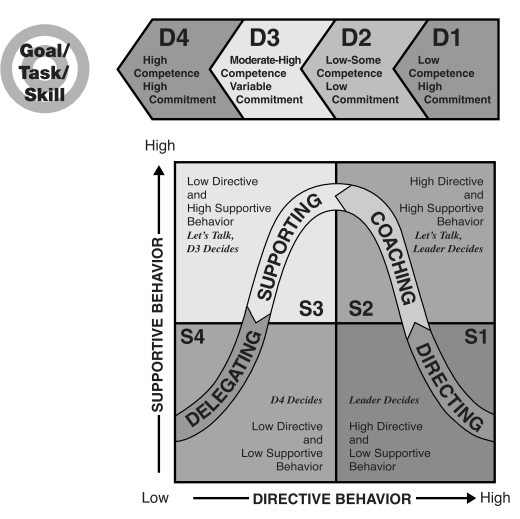
Once you are able to begin the process of helping people develop positive and possibility attitudes, you create even more possibilities. It’s rather like knowledge and learning. Generally, the more you know and learn, the more you realize there is to learn. The more you focus on possibilities, the more possibilities seem to be possible. High expectation and positive attitudes lead to high performance. High performance leads to higher expectations. Individuals and teams go through four stages of development before they become high performers.


Stage 1: In the beginning, you may find that as people move into uncharted waters and begin to perform tasks and make decisions that are new, they will need a great deal of attention from you. Anytime there is a need for new knowledge or apprehension about the outcomes, people will require direction. Many will have to be shown how to perform a particular task. Others will need explanation, information, and instruction. Most will still look to you for decisions and priorities. Your behavior at this stage should be highly directive. You will need to provide knowledge and model behavior to help people learn, understand, and develop competence. This requires time and patience. That outcome, however, is more time for you because as they become competent, they are more willing to perform functions that once took your time.

Stage 2: As people become more competent in their roles and their attitudes are more positive, the need for highly directive supervision and instruction diminishes. Your role then becomes that of a coach. Coaches still provide direction, suggestions, and input, but begin to elicit more feedback, and decisions are frequently made jointly. As confidence and competence grow, people will begin to make suggestions and provide you with input and ideas. Your behavior needs to be supportive and focused on mutual goal setting, high recognition, and praise for accomplishments. This two-way process creates a tremendous opportunity to lead people to even higher levels of performance.

Stage 3: As people become more confident about their ability to perform their jobs successfully, you can empower them to make decisions that influence the outcomes. Delegate authority to solve problems and make improvements. Enhance personal responsibility and accountability. Create additional opportunities. Be highly supportive but less directive. People need to feel like they have control over those factors which affect their destiny. As they control more of their activities, you can spend less time managing people and processes and spend more time growing the company. Developing people has immense benefits for the future.

Stage 4: At this final stage, people want to do their jobs and they have developed the competence and confidence to know they can. They can be counted upon to make decisions, implement change, achieve their business goals, and positively impact the success of the organization. They will require very little supervision from you. Provide support, but refrain from over managing that which they know how to do. Instead, their greatest need will be your leadership. They will look to you to provide the direction, the values, and the behaviors that they can emulate to help build their divisions, departments, and people. They will seek new and better ways to do business.

Seek out potential leads in your organization. Create an environment, develop the personal skills, and nurture the innovation that can ensure your competitive advantage. Meeting the challenges that you will face tomorrow will require you to drive leadership qualities throughout your organization because it will require everyone to see beyond traditional methods and expected outcomes. 

The future belongs to those who create it!


Monday, August 5, 2013

How to Determine and Improve the Performance Gaps?


Human capital is a top priority in today’s global economy.
In fact many businesses are faced with the reality that they need to get more results through smaller and perhaps more fragmented teams. As your employees have added and shifted roles, positions, and responsibilities, how do you know you have the right people in the right positions in order to maximize your business efforts and outcomes?

The reality is, in some cases you do have the right team members in right places, and in some cases you probably guessed wrong, as we all have. Companies forced to reorganize made quick decisions resulting in people landing in the wrong roles.

Likewise, companies that have experienced intense growth have ended up with similar results. Diagnostic assessments can help you to determine performance gaps and help your company to effectively understand and align the talents, behaviors, and motivators of every employee. Having the right employee in the right position is as critical to the individual’s success as it is to the success of the company.

The first step in bridging performance gaps is for management to be committed to a people development process for employees. It should be based on the skills, attitudes, and behaviors necessary to do their jobs successfully. If the size of the organization is large enough it can be HR implemented, but the objectives and strategies of developing employees and how those employees are going to help drive results needs to be driven by management.


After the commitment is in place and the objectives have been identified, diagnostic assessments can help specifically and individually determine performance gaps, as developmental issues will be employee specific. Assessments can also be the secret tool for creating skill development as well attitudinal and behavioral improvement while eliminating resistance to change.

When working with clients, we focus diagnostically on the whole person as defined by these three key areas:
§  WHAT natural talents do your employees possess? How do they make decisions and interact with the world around them, as well as how do they perceive themselves?
§  WHY are your employees motivated to use their natural talents, based on their personal motivators and drivers? Everyone has their own unique mix of personal drivers and motivators that help guide them toward success. Understanding what really drives a person is a crucial part of success.
§  HOW do your employees prefer to use their natural talents, based on their preferred behavioral style? Since each individual has their own unique preferences and habits for how they like to behave, this understanding is crucial when working with team members, as a leader or manager, or in an environment that requires conflict resolution.


Establishing new behaviors requires the employee feel able to adopt the behavior and feel comfortable doing so. A well-designed people development process focused on objectives using diagnostic assessments drives long-term change. We consistently see 80-100% in adaptable change after the completion of a development process with sustainable results that remain a year later.


Wednesday, July 31, 2013

Recognizing Perfectionism - Do You Think You Are A Perfectionist?

What does a perfectionist look like? Bo Derek in the movie “10” will always epitomize a man’s vision of what a perfect woman should look like. Movies and television are great ways for us to explore the physical boundaries of fantasy.


The pursuit of perfect physical attributes will continue to keep plastic surgeons wealthy. But what about those of us who live with the personality of a perfectionist? There are no plastic surgeons to reshape the way we think, or react with others.

However, there are ways we can learn to cope.


The Iron Lady - Watch Meryl Streep play former British Prime Minister Margaret Thatcher in the movie, “Iron Lady.” Thatcher earned the moniker “iron lady” because she had a strong moral compass of what was right—and wrong—in the world. She was a perfectionist who stuck by her strict standards and took hard lines against policies she felt did not work toward the greater good.

The movie, is an intimate portrait of Great Britain’s first and only female Prime Minister. Thatcher ran a tight ship and was one of the 20th century’s most famous and influential women.

Margaret Thatcher is an example of a principled leader who places a great deal of worth on integrity. Perfectionists are orderly, want the job done right, and pursue a vision of perfection. They have a strong sense of right and wrong, and in pursuit of perfection, their worst nightmare is that they might get it wrong.

What is A Perfectionist?
I am the sort of person who believes that mistakes can provide a great learning experience, but perfectionists have a difficult time giving themselves permission to be wrong. They look around and see everything that isn’t done right—and they resent it. This can turn into self-loathing and self-mutilation if it gets too far out of hand.
Remember Natalie Portman’s descent in the movie “Black Swan.” A perfectionist can feel anger when things don’t turn out as well as they feel they should.

This is an extreme reaction. Most perfectionists are merely content to point out the incompetence and disorganization they see around them. Because of this, they can be very judgmental—on themselves and those that work with them.

How Does A Perfectionist Think?
Perfectionists see themselves as just trying to do the right thing with as few errors as possible. They are attracted to things that work for the greater good and projects that will help them become better people. That’s why they get critical when they see lax standards in either themselves or others.

Here’s how to tell if you work or live with a perfectionist: They...
  • Don’t look for shortcuts; they want the job done right.
  • Like schedules and lists.
  • Have a relentless eye for details—like bad grammar and spelling.
  • Do not have warm people skills.
  • Take great pains, and then give them to others.
  • Want work done to a standard, and will tell you what it is.
  • Notice incompetence and this BUGS them.
Stephen Covey of The Seven Habits of Highly Effective People writes, “Our security comes from knowing that correct principles do not change. We can depend on them. Principles don’t react to anything. They don’t get mad and treat us differently. Principles are deep, fundamental truths... they are rightly woven threads running with exactness, consistency, beauty, and strength throughout the fabric of life.”

Do you notice how many times the word “principle” comes up? Stephen Covey cares about quality and he loves a good plan. He is a perfectionist.

How To Spot A Perfectionist
Behavior may be the same for a variety of people; it’s the reason for the behavior that distinguishes us.

Let’s use an example. Leaders and thinkers always prepare for a meeting. Why do they want to be prepared? There are several reasons, and they depend on our personality types:
  • Achiever—want to look good.
  • Risk-adverse—reduce fear of failure.
  • Domineering—in control
  • Analytical—have all the information.
  • A perfectionist, however, would want to be prepared so everything runs according to plan.
I am analytical and I need all the information that I need to making a decision because I want to make sure that the decision that I make is the best possible decision for the issue at hand. For a perfectionist, however, there is only one moral standard, and that is moored to authority, plans, and principles.

Listen to Them
Perfectionists are remarkable leaders because they feel that they lead by moral example and inspire others to live the same way. Here are some typical comments that you can typically hear from them:
  • I am a serious, no-nonsense type of person.
  • I follow my conscience.
  • I feel like I am living with a judge inside my head – one that is harsh and judgmental.
  • I believe that right is right and wrong is wrong—that’s all there is to it.
  • I don’t understand why so many people have lax standards.
  • I have to do it, or it won’t get done the right way.
How To Motivate A Perfectionist
Hillary Clinton  is a perfectionist. I am certain that you know several others. Here are some tips to help you motivate the perfectionists in your life to perform at their best:
  • Combine strong values with a vision of high standards.
  • Show integrity.
  • Arrange feedback from people they respect.
  • Create and maintain structure and clear channels of authority.
  • Provide accountability and guidelines—they thrive on it.
  • Provide appreciation and recognition.
  • Set limits on their responsibilities so they know they won’t be blamed for a mistake.
  • Attract a perfectionist as a new client by helping them to find ways to justify their actions—they do not change their minds easily.
  • Provide them with everything so they know what is required—they really need the rules.
History is full of perfectionists who left their comfortable lives to do something extraordinary because they felt it was a higher calling. Their talents are well worth our time and effort to uncover.

Do you think you are a perfectionist?
What tips do you have for motivating others like you?
What are your greatest strengths?


Tuesday, July 30, 2013

Stop Making Excuses

Excuses Are Like...

When a salesperson is not closing sales, the excuses start coming out. There are all kinds of them.
  • My prospects are all broke.
  • The economy's tough.
  • People don't want our stuff.
  • No one wants to work during the holidays.

Right now there are a lot of people watching and worrying about the "economy." And for many, it's a convenient excuse. Right now there are probably at least a few other salespeople who you've talked with who are making excuses and talking about how tough it is out there. The fact is this is all just talk.

You create your own reality.

If you think things are bad, or are going to be bad, then they will be. You'll hold back and not give it your all subconsciously if you think this way. How will a bad "economy" really affect you anyway? Have you ever seen an "economy?" Ever touched one? Smelled one? The "economy" is just an idea. It's a not a real thing.

What matters is what's going on with each and every single individual prospect that you are selling to or can sell to. That's what matters. So if you want to sell more, right now, then start focusing on what matters.

Go out and find people who have problems ... or pain ... or needs. There are always plenty of those! Maybe it's more difficult now, but then again maybe it's not. Determining a need gets REALLY easy during times like these. Overcoming fears to satisfy those needs can become more of a challenge.

There's always an excuse available.

Stop making excuses.

Go find a pain and create a sale.

Monday, July 29, 2013

Who are your Ideal Target Audience?


Narrowing your focus to one primary group of people is often difficult for small business owners. They want to help everyone and very often their product or service can help a variety of people.

It also goes against human nature to narrow your focus in order to grow a business. Common sense seems to tell us if we want to grow our business big, we need to appeal to more people.

In reality the opposite is true. When we narrow our focus to a particular group of people, we become an expert in solving their particular problems. We get to know them very well and we can develop additional products and services to fill their needs.

So how do you decide to whom to market?


Here are some tips:
  1. Think about the type of people who can MOST benefit from what you have to offer.
  2. Think about who you would most enjoy helping or working.
  3. Think about the type of people who will be easiest to reach, AND who will be most receptive to what you are selling. These will be people who KNOW they have the problem you can solve and are LOOKING for a solution.
  4. Know that just because you select a particular group of people to focus your marketing on, does NOT mean you can't help others who may come to you. It only means you are going to focus your proactive marketing efforts on the target group you select.
  5. Lastly, don't over-think it. Listen to your gut, pick a group you feel you can really help, and proceed with the development of your marketing plan. Marketing is a fluid process. The important thing is to start. You can always refine your audience and your plan later as you learn more. 

Use our marketing kits to reach your target audience!